Example trip
The perfect Renaissance tour of Tuscany
Renaissance art in Florence, then Pienza and Montepulciano with a regional overnight base and time to explore each town.
Add the places to My trip to shape the itinerary around your dates. Plan to stay in or near Pienza between the two Tuscan days, with extra time for each journey.
Day 1
Medici patronage and the civic palace
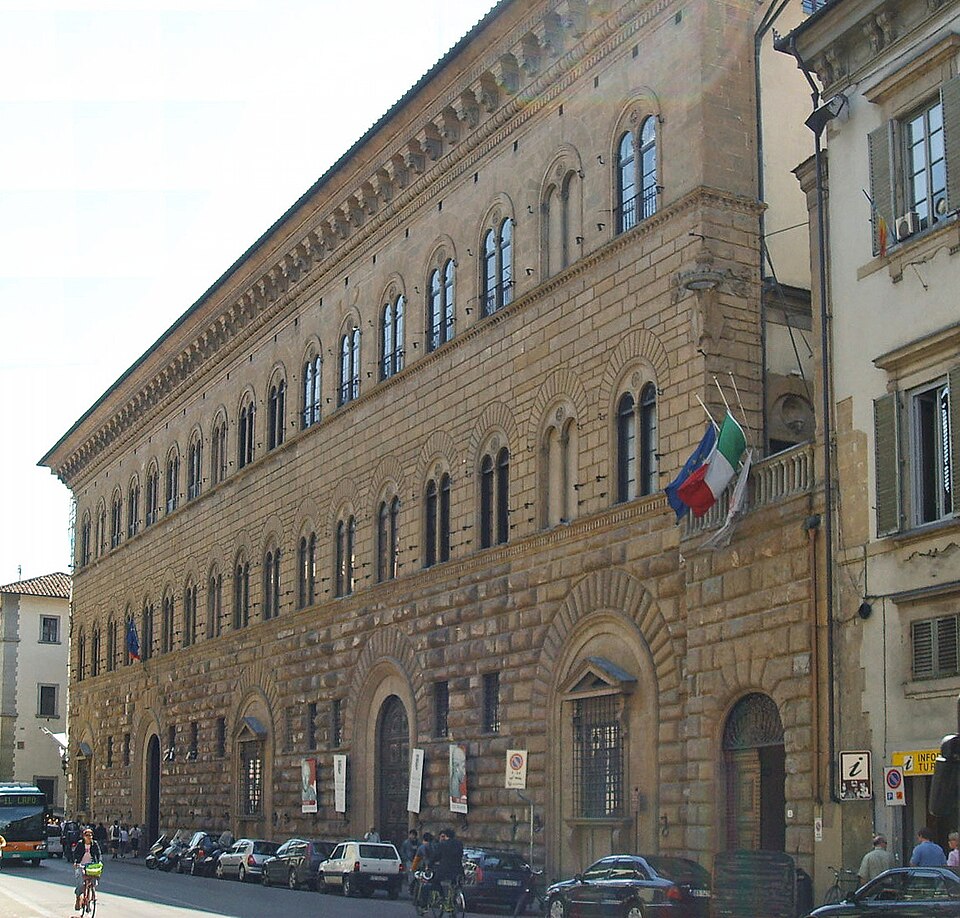
Your Renaissance tour begins at Medici Riccardi Palace, whose Magi Chapel was frescoed by Benozzo Gozzoli in the mid-15th century. A short stroll takes you to Uffizi Gallery, with Palazzo Vecchio a short stroll away. You’ll spend about 15 minutes walking across the day.
Visit notes
Your Renaissance tour begins in the courtyard and Magi Chapel of Palazzo Medici Riccardi, before you walk through the centre to the Uffizi. Give the gallery around three hours so you can linger over the Renaissance paintings. After lunch, you’ll visit the monumental rooms of Palazzo Vecchio and see the palace from inside. For a day with fewer museum visits, finish with a walk around Piazza della Signoria instead of going into Palazzo Vecchio.
Times and practical details
Outline for the day
Visits, walking and breaks: 8 hr 15 min
An outline, with travel and lunch. Allowances are rounded up to quarter hours; walks may be shorter.
- From your accommodation to Medici Riccardi Palace
- Medici Riccardi Palace1 hr 15 min
- Walk to Uffizi Gallery15 min
- Uffizi Gallery3 hr
- Lunch break1 hr
- Walk to Palazzo Vecchio – Monumental Apartments15 min
- Palazzo Vecchio – Monumental Apartments1 hr 30 min
- From Palazzo Vecchio – Monumental Apartments back to your accommodation
- Walking
- 15 min
- Time for queues and entry checks
- 45 min
Begin with the Medici palace’s courtyard and Magi Chapel, then walk south through the centre to the Uffizi. Leave the long gallery visit intact: it provides the day’s main encounter with Renaissance painting rather than a brief tick on a list.
Take lunch before returning to the monumental rooms of Palazzo Vecchio. The rooms are the chosen visit, not the tower climb or archaeological excavations. The contrast between private palace, picture collection and civic palace gives the day a connected subject.
For less museum time, keep the Medici palace and Uffizi and enjoy Piazza della Signoria from outside. The Uffizi’s usual Monday closure, the Medici palace’s Wednesday closure and the civic museum’s shorter Thursday hours need to shape the day chosen.
Day 2
Pienza and a night in Val d’Orcia
Begin with a visit to Palazzo Piccolomini. A short stroll takes you to Duomo di Pienza, whose bright windows recall the German hall churches Pius II encountered on his travels. Afterwards, a short walk brings you to Palazzo Comunale. This plan doesn’t yet include travel time between all the stops.
Visit notes
Continue your Renaissance tour in Pienza’s Piazza Pio II, taking in the cathedral and palaces before visiting Palazzo Piccolomini and its garden when admission is available. Take a look inside the cathedral before settling down to lunch in town. The afternoon is for the lanes, views over the Val d’Orcia and a look at the town hall from the square. This day is designed around a night in or near Pienza, ready to continue to Montepulciano tomorrow.
Times and practical details
Outline for the day
Visits, walking and breaks: 5 hr 30 min
An outline, with travel and lunch. Allowances are rounded up to quarter hours; walks may be shorter.
- From your accommodation to Palazzo Piccolomini
- Palazzo Piccolomini1 hr
- Walk to Duomo di Pienza15 min
- Duomo di Pienza30 min
- Walk to Palazzo Comunale15 min
- Palazzo Comunale30 min
- Lunch break1 hr
- Exploring the town1 hr 30 min
- From Palazzo Comunale back to your accommodation
- Time for queues and entry checks
- 30 min
Start in Piazza Pio II to see the cathedral and palaces as a planned group, then visit Palazzo Piccolomini and its garden when admission is available. The hour is a visit budget, not a promised guided-tour duration. Continue into the cathedral outside religious services.
Take lunch in town and spend the afternoon on the smaller lanes and views towards Val d’Orcia. The Palazzo Comunale stop is for the exterior on the square; it does not promise admission to municipal rooms or a tower. The time for exploring is deliberate rather than an extra list of paid attractions.
This works best as part of a regional stay: arrange a base in or near Pienza for the following Montepulciano day. Transport between Florence, Pienza and your accommodation still needs a dated plan. For a return to Florence each night, the journeys may consume the afternoon; do not treat this as a confirmed public-transport day trip.
Day 3
San Biagio and the streets of Montepulciano
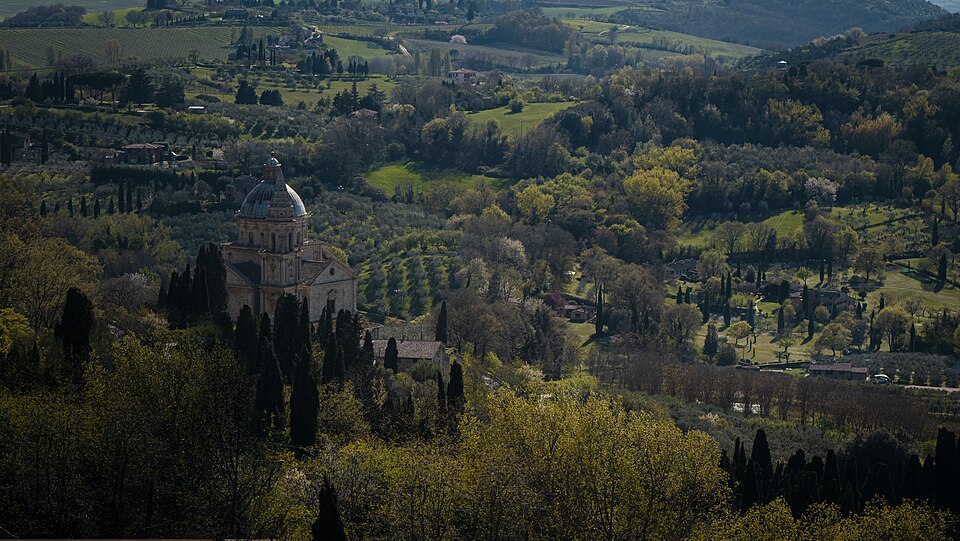
Set out from San Biagio, Montepulciano, which echoes the Greek-cross plan of Santa Maria delle Carceri in Prato: Antonio da Sangallo the Elder drew on his brother Giuliano’s design. Next, visit Cathedral of Montepulciano before a short stroll to Museo Civico di Montepulciano. This plan doesn’t yet include travel time between all the stops.
Visit notes
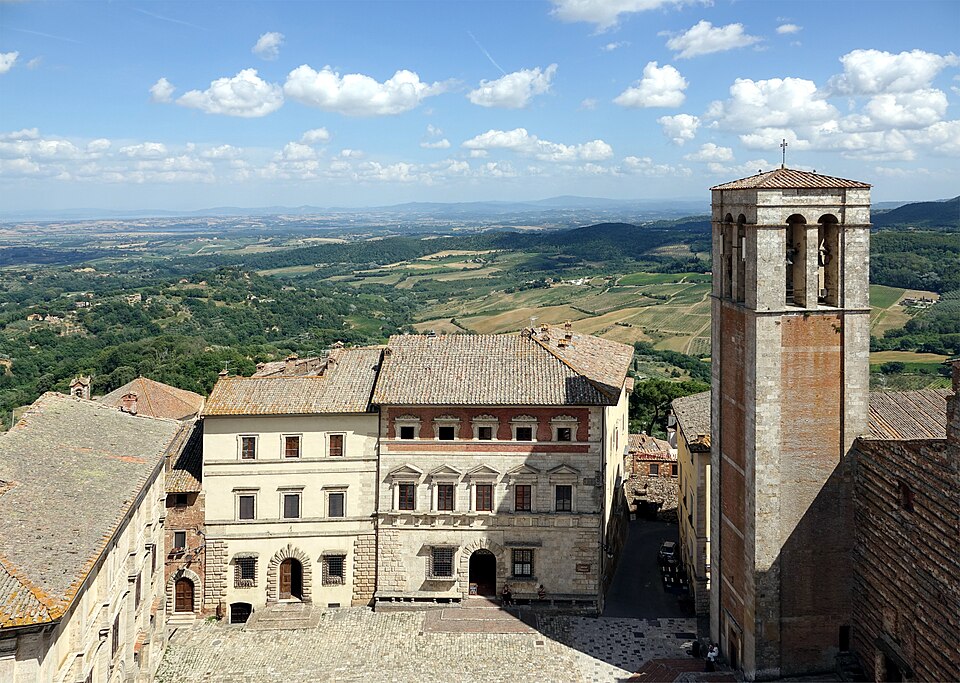
For the last day of your Renaissance tour, start below Montepulciano at San Biagio, with time for the church and its setting before heading uphill towards Piazza Grande. Around the square, you’ll visit the cathedral and pause for lunch. In the afternoon, spend time with the art collection at the Museo Civico, then wander through the streets and viewpoints. Leave room for the journey back to your accommodation or to Florence, especially if you’re returning that evening.
Times and practical details
Outline for the day
Visits, walking and breaks: 6 hr 30 min
An outline, with travel and lunch. Allowances are rounded up to quarter hours; walks may be shorter.
- From your accommodation to San Biagio, Montepulciano
- San Biagio, Montepulciano45 min
- Walk to Cathedral of Montepulciano15 min
- Cathedral of Montepulciano30 min
- Lunch break1 hr
- Walk to Museo Civico di Montepulciano15 min
- Museo Civico di Montepulciano1 hr 30 min
- Exploring the town1 hr
- From Museo Civico di Montepulciano back to your accommodation
- Walking
- 30 min
- Time for queues and entry checks
- 45 min
Begin at San Biagio below the town, considering the church’s plan and its setting before entering when visitor access permits. Reaching Piazza Grande on foot involves a sustained uphill walk; arrival and parking choices change this leg substantially.
Spend time around Piazza Grande and the cathedral, then stop for lunch. Visit the Museo Civico for the town’s art collection and use the remaining time for streets and views. A tasting or winery visit is a separate booking and journey, not an activity assumed to fit into a spare hour.
For an easier day, keep the historic centre and museum and omit the lower church, or arrange the transfer rather than assume step-free access. If returning to Florence, protect the departure time and include the last transfer to your accommodation. The regional stay in this example does not establish a booked hotel, vehicle or public-transport connection.
Places in this trip
Landmark · Museum
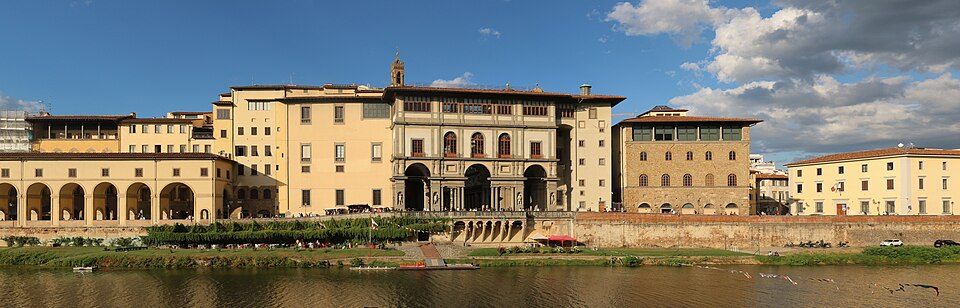
Uffizi Gallery
The Uffizi Gallery is one of the world’s most important museums, with an immense artistic heritage. An eighteenth-century reorganisation made it primarily a painting museum, with thousands of works from the thirteenth to eighteenth centuries. Other collections—arms, scientific instruments, archaeological finds and ancient and modern bronzes—were transferred elsewhere to establish new museums. Piazzale degli Uffizi, 50122 Firenze FI, ItaliaLandmark · Museum
Palazzo Vecchio – Monumental Apartments
Palazzo Vecchio is the city’s symbolic monument and has been the seat of its government for more than seven centuries. It preserves extraordinary evidence of every major period in Florence’s history and art. Its imposing bulk overlooks Piazza della Signoria. Piazza della Signoria, 50122 Firenze FI, Italia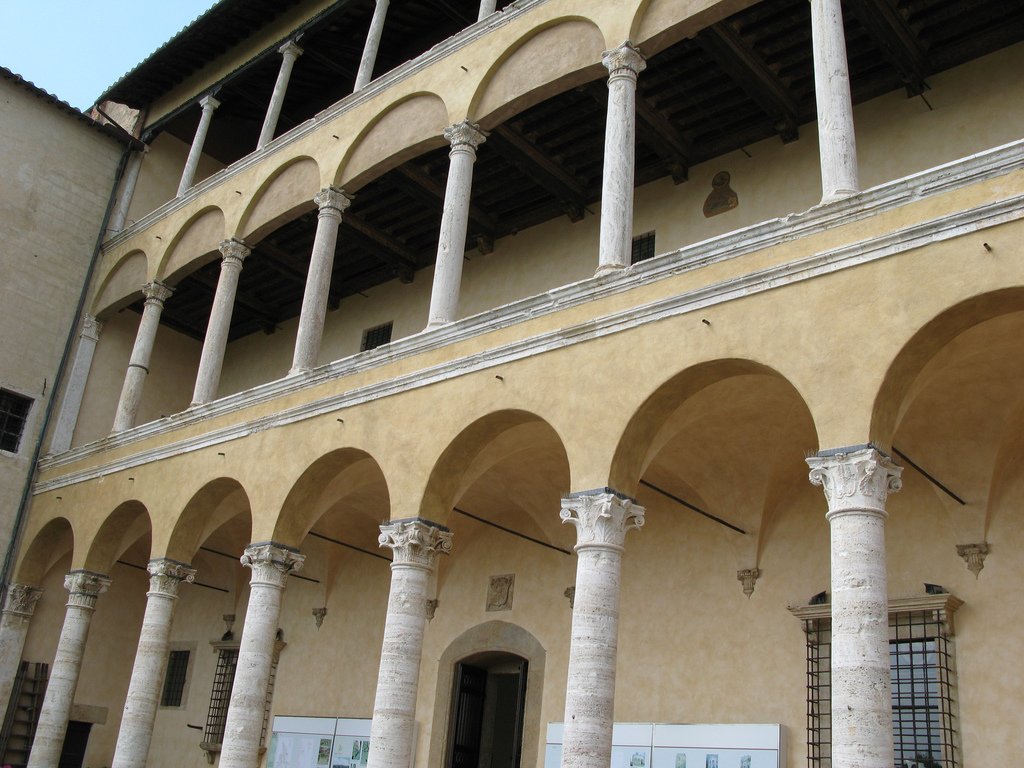
These are starting ideas. Visit lengths, opening times, tickets and travel still need to fit your dates and needs.
More trip ideas